


Why Board Management Software Matters
Managing a school board without the right tools can quickly become frustrating. Endless emails, scattered documents, and missed deadlines are common problems. Board members become disengaged when administrative burdens make participation difficult.
A purpose-built system like Our Cat Herder changes how your board operates. It centralises communication, documents, and tasks, reducing the administrative workload for your team.
When board members can find what they need in one place, participation improves. Meetings stay focused on strategy rather than logistics, and governance at your school becomes more effective.
Benefits of Our Cat Herder for Schools
Our Cat Herder is an intuitive board portal built for independent and Catholic school board administrators. Here is what it offers:
Easy Meeting Organisation
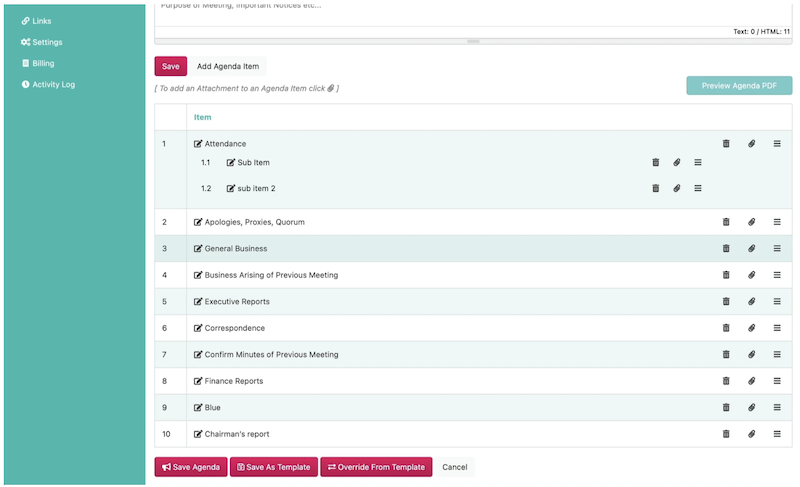
The agenda builder feature allows you to quickly make customised agendas for each meeting by using saved templates, saving hours of work for regular recurring meetings.
The meeting invite feature automatically sends board members invites so they can view board packs and agendas ahead of time.
Making last-minute changes or additions to the agenda is easy. The system keeps meeting packs instantly up to date, so anyone accessing a pack always sees the latest version.
Smooth Collaboration
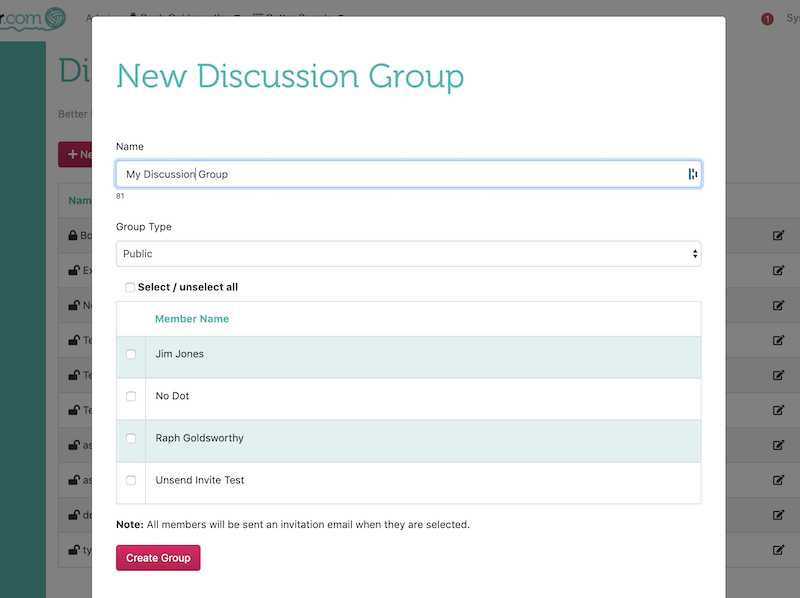
Centralise all board communication within the portal. Discussions keep conversations organised and searchable, in one place rather than scattered across emails.
Make and track decisions faster using digital voting in our flying minutes tool. Discussion group permissions let you control privacy or transparency as needed.
The document repository stores agendas, minutes, reports, policies, and any other files board members need. Permission settings restrict sensitive documents to only the portal members who need to see them.
Streamlined Meeting Management
Our Cat Herder’s minute taker feature lets you quickly capture meeting notes, decisions, and action items while meetings are in session. Past meeting minutes are automatically added to the next meeting to speed up pack creation.
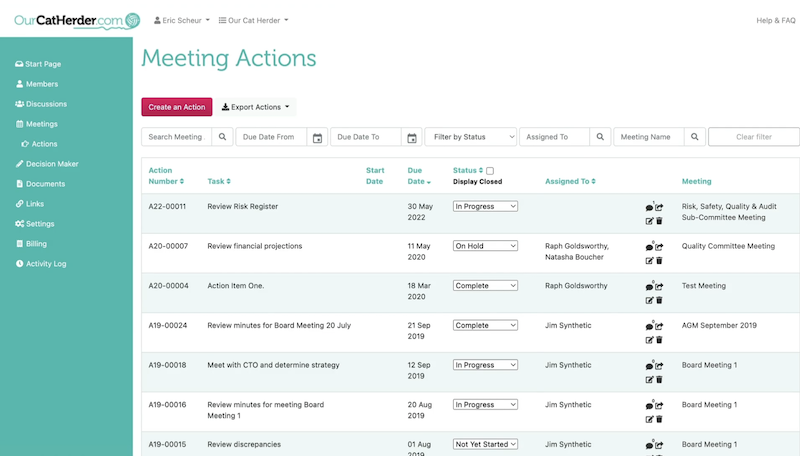
Our Cat Herder’s actions toolset lets you assign tasks to members during meetings and track progress between meetings.
Board members can privately annotate meeting packs, or add comments directly to a meeting for all attendees to see.
Why Choose Our Cat Herder
Our Cat Herder is a board portal built for not-for-profits, including schools. It gives school board administrators the convenience, control, and collaboration features they need.
The interface is intuitive and requires minimal training. Members can be up and running in minutes. Our Cat Herder also offers advanced functionality like voting, action tracking, and granular permissions.
Access controls let you configure tiered access levels to meet your school board’s requirements. Data is encrypted both in transit and at rest.
We continually improve the product based on customer feedback, and our support team is here to help your board work more productively.
Sign up for a 45-day free trial to see what the platform can do for your school’s board of directors.
Streamline your School’s Governance by starting your 45-day free trial today
Not from a school? Discover how Our Cat Herder’s board portal can help your organisation on our industries page.
Resources to Improve Your School’s Governance
Looking for more resources to streamline your school’s governance and board administration? Check out some of our free resources.
Effective Board Packs: The Complete Guide
Company Secretary Playbook: How to Reduce the Size of Board Packs
The Optimal Timeline for Board Pack Delivery
Company Secretary Playbook: Effective Board Meetings
Free School Governance Webinar
Frequently Asked Questions
How often should our school's board of governs meet?
Experts typically recommend that independent school boards meet at least 4-6 times per year at a minimum. Meeting quarterly or monthly tends to be quite common for most school boards. Supplementing the regular meetings with special sessions as needed for time-sensitive issues is also an option. More frequent meetings keep boards closely engaged with the school, but too many meetings can result in board fatigue. Finding the right cadence allows the board enough time to dive deep on priorities between meetings while still maintaining an active governance role.
What makes for an effective board agenda?
An effective board agenda should focus on strategic and mission-critical issues rather than routine business. Using consent agendas can allow routine items like previous meeting minutes to be handled efficiently in bulk. Discussion topics should align with the school's overall mission, vision and strategic goals. Critical items like budget approvals, policy updates, or major decisions should receive priority. Adequate time should be left for open dialogue rather than packing the agenda too tightly. The board chair and head of school should collaborate closely on agenda creation and annual planning.
How can we improve board member and governor engagement?
Sharing board materials well in advance, a minimum of 7 days prior to meetings, helps engagement by allowing board members preparation time. Following up promptly on any board member questions or concerns arising between meetings keeps engagement high. Publicly recognising board member contributions and thanking them builds engagement. Providing ongoing training, development programs, and board retreats expands skills and relationships between board members leading to better board participation.
How do we evaluate the head of school?
The board should establish clear goals and performance metrics for the head of school in advance each year. Surveying faculty, parents and students can gather 360 feedback on the head's leadership. A board committee can conduct an annual performance review and make a recommendation to the full board. Evaluation outcomes should directly tie to contract renewal decisions. Benchmarking compensation ensures the head is fairly paid based on peers. Multi-year contracts help retain effective heads through long-term agreements.